


Domestic Electrician in Sheffield
IE Electricals is a domestic electrician covering Sheffield and surrounding areas, handling household electrical work from sockets and lighting to consumer unit upgrades and new circuits, all in line with BS 7671. To discuss a domestic job or request a quote, call IE Electricals on 07427 293958.
IE Electricals carries out domestic electrical work across Sheffield and surrounding areas, from one extra socket to a full consumer unit upgrade. Every job starts with a clear look at what the property needs, so you know what is involved before anything is booked in.
Household electrics cover a wide range of jobs. Sockets and switches, lighting, showers, cookers, outdoor power and tracking down faults that trip the consumer unit. Some of this work is straightforward and some needs a certificate, and IE Electricals will tell you which applies before work starts.
Whether you are updating a kitchen, adding sockets to a home office or dealing with lights that keep failing, the approach stays the same: a proper look at the existing wiring, a written quote after a survey, and work carried out in line with BS 7671.
Everyday household electrical work
Most domestic call outs fall into a handful of common jobs. These cover the everyday things that come up in a home, whether it is a new build snag, an older property that needs updating, or a single fault that needs tracking down.
- Sockets and switches: new, additional or replacement
- Lighting: pendant fittings, downlights and outdoor lighting
- Showers: dedicated circuits for electric showers
- Cookers: dedicated circuits for cookers and ovens
- Outdoor power: garden and outbuilding supplies, garages and sheds
- Fault finding: tracing trips, flickering lights and dead sockets
Kitchens, bathrooms and home offices
Kitchens and bathrooms carry their own electrical considerations. A kitchen typically needs several dedicated circuits for the cooker, appliances and worktop sockets, while a bathroom has specific rules around where sockets, switches and light fittings can sit relative to a bath or shower.
A home office or a converted room often needs extra sockets and sometimes its own circuit, particularly where several items are plugged in at once. This is worth mentioning when you get in touch, so the right circuit is planned in from the start rather than added later as an afterthought.
None of this needs to be worked out by the customer in advance. A description of the room and how it is used is enough for IE Electricals to work out what circuits are needed before a survey confirms the detail.
Fault finding in the home
A tripping consumer unit, a socket that has stopped working, or lights that flicker for no obvious reason are some of the most common reasons a domestic electrician gets called out. The starting point is always working out which circuit is affected and why, rather than guessing at a fix.
Some faults are simple, such as a loose connection or a failed accessory. Others point to something wider, like ageing cable insulation or a consumer unit that is no longer suited to how the property is used. Either way, the fault is explained once it is found, along with what is needed to put it right.
A fault that keeps coming back, rather than being a one off, is often worth a closer look at the wider installation rather than repeated repairs to the same symptom. This is talked through honestly, so you are not paying to fix the same thing more than once.
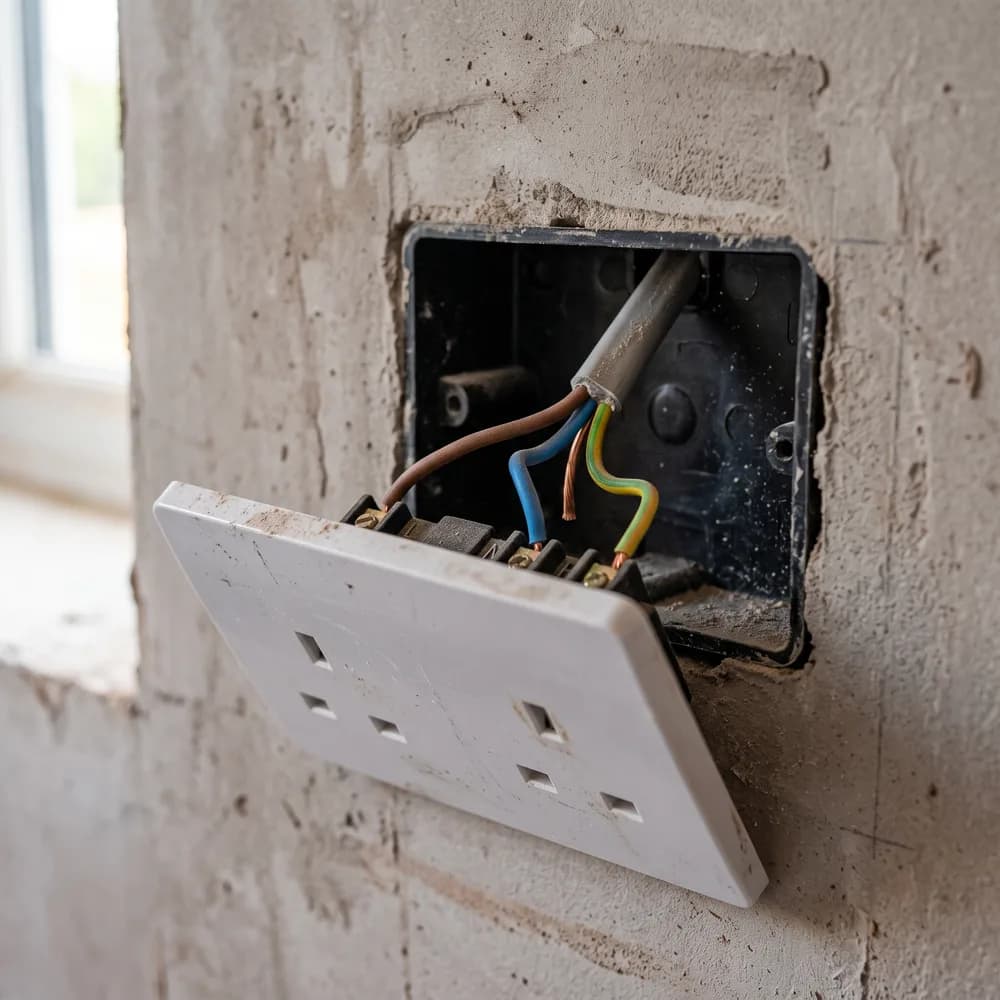
Household electrical work including sockets, lighting and consumer units.
Certificates and notifiable work
Not every job needs the same paperwork. Adding a socket or a light to an existing circuit is usually covered by a Minor Electrical Installation Works Certificate. A new circuit, a new consumer unit or a rewire needs an Electrical Installation Certificate (EIC) instead, confirming the work meets BS 7671 and is safe to use. You will always be told which certificate applies before work starts.
Part P of the Building Regulations covers certain domestic electrical work in England and Wales. Notifiable work typically includes a new circuit, a consumer unit replacement, or new fixed wiring in a bathroom. This work is certified through a competent person scheme or through building control, a process rather than a badge.
Non-notifiable work, such as extending an existing circuit or a like-for-like replacement, still has to meet BS 7671, even though it does not need to be notified in the same way. If you are unsure whether your job falls into either category, IE Electricals will confirm this as part of the initial discussion, and both certificates are worth keeping once issued.
Consumer units and modern protection
A consumer unit, still called a fuse box by most homeowners, is the board that distributes and protects the circuits in a property. Older boards often lack the protection built into a modern unit, particularly RCD protection, which disconnects the supply automatically if it detects current leaking to earth.
If a domestic job involves opening up the consumer unit, whether for a new circuit or a fault, it is a natural point to check whether the existing board still offers that level of protection, and to explain the options if it does not. Nothing is changed without being agreed first, so any upgrade is your decision, explained plainly before you commit to it.
What happens when we visit
A visit starts with a look at the job and the existing wiring, so the scope is clear before any work begins. For anything beyond a small job, a written quote follows a survey rather than a figure given over the phone.
On the day work is carried out, you are told what has been done and what, if anything, needs to be tested or signed off before the job is complete. All domestic electrical work is carried out in line with BS 7671, the current UK wiring standard, whether the job is a single socket or a full rewire.
What to send with an enquiry
- What the job involves, in your own words (for example a new socket, a shower circuit or a fault you have noticed)
- The age of the property and whether it has been rewired before, if you know
- Photos of the consumer unit and the area the work relates to
- Whether the property is rented or owner occupied
- The best way and time to reach you
Frequently asked questions
How much does domestic electrical work cost?
Cost depends on the size of the job, the number of circuits involved, access to the wiring and whether decoration is needed afterwards. A written quote follows a survey of the property, so the price reflects the actual work rather than a general figure. Get in touch with details of the job to start that process.
How long does a typical household electrical job take?
How long a household electrical job takes depends on its scope: a single socket or light sits at one end, a new circuit or several rooms of work at the other. Access and the condition of the existing wiring matter too. A clear timescale is confirmed once the scope is known, usually as part of the survey.
What happens when a domestic electrician visits my home?
IE Electricals looks at the job and the existing wiring before work begins, so the scope is agreed upfront. Smaller jobs may be completed on the visit, while larger jobs are quoted after a survey. You are told what work is being carried out and what it involves at every stage.
What will I receive once the work is finished?
You receive the correct paperwork for the work carried out. A Minor Electrical Installation Works Certificate covers additions to an existing circuit, and an Electrical Installation Certificate covers new circuits, consumer unit work or a rewire. Which one applies is confirmed before work starts, so you know what to expect.
Which areas do you cover for domestic electrical work?
IE Electricals covers Sheffield and surrounding areas, including districts across the city and nearby towns. Every property is treated the same way regardless of area, with the same process and the same standards applied throughout. Get in touch to discuss your property and confirm coverage for your address.
How do I book a domestic electrician?
Send an enquiry with details of the job, or call IE Electricals on 07427 293958 to talk it through directly. A visit or survey is arranged once the job is understood, and a written quote follows for anything beyond a small job, so you know the cost before work starts.
Will my domestic job need a certificate?
Most domestic electrical work needs some form of certificate. Additions to an existing circuit need a Minor Electrical Installation Works Certificate, while a new circuit, a consumer unit or a rewire needs an Electrical Installation Certificate. IE Electricals confirms which applies before starting any work on your property.
Is domestic rewiring or a new circuit notifiable work?
Yes, usually. A new circuit or a replacement consumer unit falls under Part P, which means the finished job has to be signed off either by a competent person scheme or by the local building control body. Smaller jobs, such as extending a circuit that already exists, are not notified that way but still have to meet BS 7671.
What standards apply to domestic electrical work?
BS 7671 is the UK wiring standard, and it sets the bar for every household job, whether that is one socket or a whole house. It shapes the way circuits are designed, the way they are installed and the way they are tested, and nothing is signed off until those test results are clear.
What should I include when I enquire about a domestic job?
Describe the job, the age of the property if known, and whether it is rented or owner occupied. Photos of the consumer unit and the relevant area help, along with the best way to reach you. This lets IE Electricals scope the job accurately before arranging a visit or a survey.
Last updated:
Talk through your domestic job
Send an enquiry with the details of the work, or call IE Electricals on 07427 293958 to discuss your property.